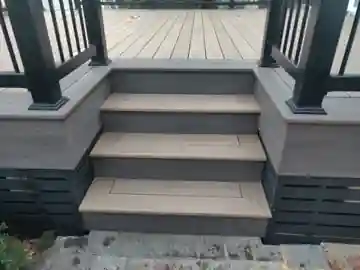
Blocking is one of the parts of a deck that disappears when the project is finished, but it supports many of the details homeowners notice most. Borders, breaker boards, railing posts, stairs and certain fastening conditions can all require additional framing.
What is deck blocking?
Blocking is framing installed between or alongside primary framing members to provide support, restraint or a fastening surface. The size, location and attachment method depend on what the blocking is intended to support.
Picture-frame borders
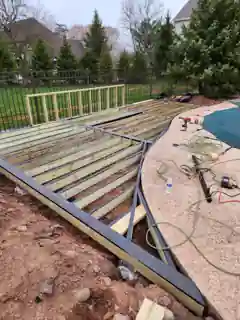
Perimeter deck boards need solid support at the required fastening locations. A picture-frame design often requires additional framing around the outside edge, especially where the field boards meet the border. Plan it before installing decking.
Breaker boards
A breaker board crosses the normal direction of the field decking, so the framing beneath it must support that orientation and the required fasteners. See our breaker board and picture-frame guide.
Railing posts
Guard and railing post connections are structural details, not just finish carpentry. They may require substantial blocking and specific hardware. Follow the railing system instructions, approved connection details and applicable local requirements rather than improvising a connection.
Stairs and landings
Stair openings and transitions can require extra support for decking, fascia and railing components. Plan these details while the framing is exposed. Our deck stair guide covers finish considerations.
Don’t guess at structural details
Blocking that carries structural loads should be sized and connected for that purpose. Manufacturer instructions, approved plans and applicable codes take priority over generic examples online.
Before finalizing the surface layout, also review our deck board layout guide and joist spacing guide.