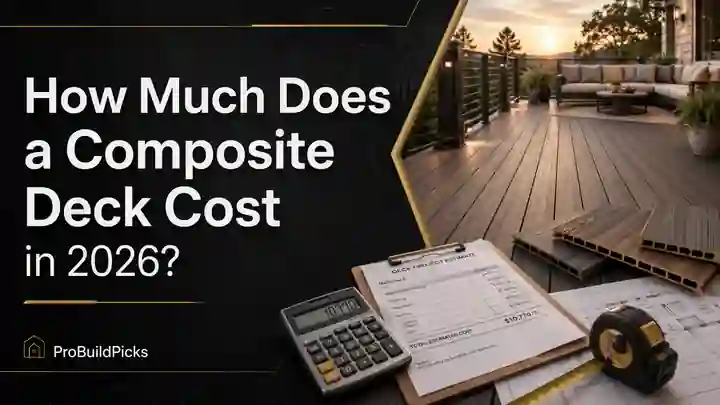
Deck railing can be one of the most underestimated parts of a deck budget. The material matters, but so do linear footage, corners, stair sections, gates, post replacement, demolition and how difficult the deck is to access.
Quick answer: current 2026 consumer cost data from Angi places many deck-railing installations between about $400 and $4,800, with an average around $2,500. That broad range is useful only as a starting point. A small straight run is very different from a second-story deck with multiple corners, stairs and gates.
2026 Deck Railing Cost by Material
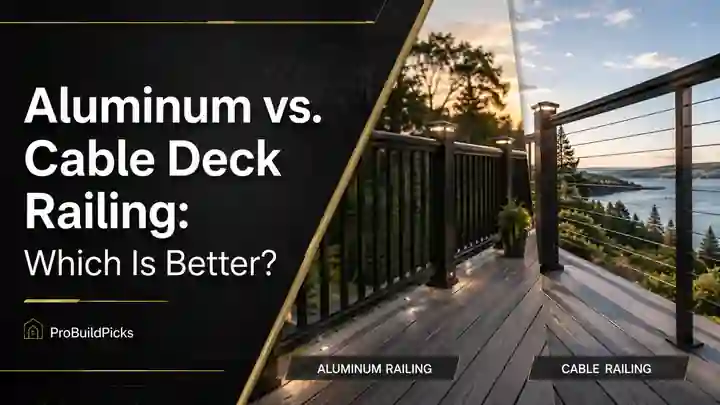
Published national ranges are wide because systems differ dramatically by brand, post style, infill, top rail and installation method. Angi’s 2026 deck-railing guide lists the following broad cost ranges per linear foot:
| Railing type | Published 2026 range per linear foot | Typical reason to choose it |
|---|---|---|
| Composite / Trex-style | $15–$60 | Low maintenance and traditional appearance |
| Vinyl / PVC | $20–$60 | Low maintenance and value-oriented systems |
| Aluminum | $50–$200 | Clean sightlines, durability and low maintenance |
| Cable | $60–$500 | Open views and modern appearance |
| Glass | $100–$600 | Maximum visibility and premium design |
These are broad published ranges, not contractor quotes. Exact systems can land well outside the middle of those ranges. Local labor, brand, post spacing, deck height and layout all matter.
Why Linear Feet Alone Can Be Misleading
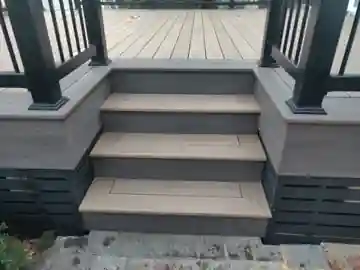
A 40-foot straight railing run is usually easier than 40 feet broken into corners, stair sections and gates. Each change in direction can add posts, hardware, layout time and labor. Stair railing is especially important because the posts, angles and transitions usually take more time than a straight level section.
Aluminum Railing Cost
Aluminum is one of the most common upgrades we like to compare on composite decks because it gives a clean look without the bulky appearance of some traditional systems. Pricing varies by panel system, post type, gate hardware, drink rails and whether the installation is level or on stairs.
If you are still choosing the railing style itself, read our Deck Railing Guide: Aluminum, Composite, Vinyl or Cable.
Composite and Vinyl Railing Cost
Composite and vinyl systems can be cost-effective, but the exact price depends on the line. Premium rails, reinforced posts, decorative balusters, lighting and drink-rail caps can push a system well beyond an entry-level package.
Cable Railing Cost
Cable railing can range from a simple post-and-cable layout to expensive stainless systems with engineered posts and premium hardware. Corners are especially important because cable direction changes affect post loading and hardware requirements. This is one reason cable estimates can vary dramatically even when the linear footage looks similar.
The Biggest Cost Drivers
- Total linear footage: more rail means more posts, panels and labor.
- Number of corners: corners typically add posts and layout work.
- Stair sections: angled rails and transitions take more time than level runs.
- Gates: gate kits, hinges, latches and reinforced posts add cost.
- Existing post condition: replacement or reinforcement changes the scope quickly.
- Deck height and access: elevated decks and difficult staging can increase labor.
- Lighting: post-cap and stair lights add wiring, transformers and electrical work.
- Drink rails and custom caps: premium top-rail details add material and finish labor.
Example: Why a 12 × 16 Deck Can Vary So Much
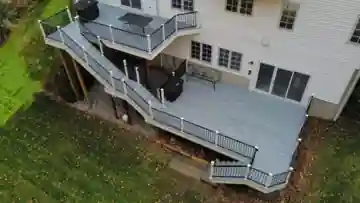
A simple 12 × 16 deck with one open side and no stairs may need far less railing than an elevated 12 × 16 deck with three exposed sides, a full stair run and a gate. The deck square footage can be identical while the railing budget is completely different.
For the full project budget, see How Much Does a Composite Deck Cost in 2026?.
Replacement Railing vs. New-Deck Railing
Replacing railing on an existing deck can look simple until the old posts are removed. If the framing was never blocked correctly for the new post system, the deck may need structural reinforcement before the new rail can be installed. Do not assume a railing-only project is just a cosmetic swap.
Our Deck Blocking Guide explains why post locations need solid framing behind them.
How to Get a Better Railing Quote
- Measure the approximate level railing footage.
- Measure stair railing separately.
- Count all corners and direction changes.
- Count gates.
- Choose two specific railing systems instead of asking for a generic “aluminum” or “cable” price.
- Confirm whether existing posts and blocking can be reused.
- Ask whether demolition and disposal are included.
- Confirm whether lighting or electrical work is part of the quote.
ProBuildPicks Takeaway
Railing should be priced as its own system, not treated as a small accessory to the decking. Material choice matters, but layout complexity often matters just as much. Compare the exact system, post count, stair sections, gates and labor scope before deciding which quote offers the best value.
Cost Sources Checked
Continue planning: use our Free 3D Deck Designer to map the deck perimeter and stair location before estimating railing quantities.