
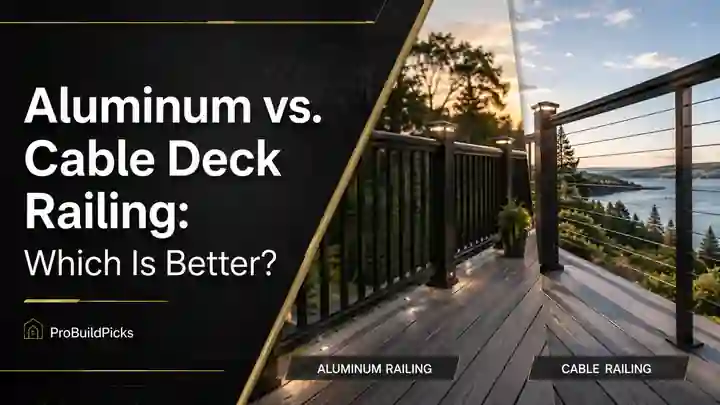
Deck railing affects safety, maintenance, sightlines and the overall look of an outdoor space. Aluminum, composite, vinyl and cable systems can all work well, but each has different strengths, costs and installation requirements.
Affiliate disclosure: ProBuildPicks may earn a commission from qualifying purchases through links in this guide, at no additional cost to you.
The Short Answer
Choose aluminum if you want a clean, low-maintenance system with relatively slim profiles. Choose composite when you want a substantial appearance that coordinates with composite decking. Choose vinyl when low maintenance and straightforward styling are priorities. Choose cable when preserving the view is a major goal and the system is permitted and installed correctly.
Start With Code and the Exact System
Railing is a life-safety component. Before choosing a style, verify the requirements that apply to the project, including guard height, stair rail details, opening limitations, post spacing and required attachment methods. Local code and the railing manufacturer’s tested installation instructions control the final design.
Do not assume components from different manufacturers can be mixed. Many railing systems are engineered as complete assemblies.
Aluminum Railing
Aluminum railing is popular because it offers a modern appearance, low routine maintenance and relatively narrow balusters that preserve more of the view than bulky systems.
Advantages
- Low routine maintenance.
- Clean, modern appearance.
- Thin profiles can preserve sightlines.
- Available in multiple colors and styles.
- Many systems offer gates, lighting options and drink-rail configurations.
Things to Consider
- Finish quality and warranty vary by manufacturer.
- Cut edges and hardware must be handled according to the system instructions.
- Coastal or highly corrosive environments may require special consideration.
- Posts still need proper structural attachment to the framing.
Composite Railing
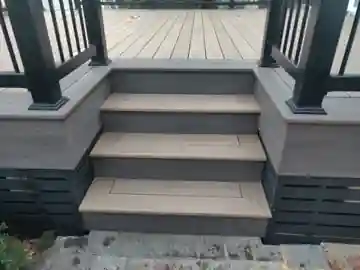
Composite railing often has larger posts and rails than aluminum, creating a more substantial traditional look. Many systems coordinate with composite decking colors and can be paired with different infill options depending on the manufacturer.
Advantages
- Substantial appearance.
- Can coordinate closely with decking and trim.
- Low maintenance compared with painted wood railing.
- May offer multiple baluster and rail-profile options.
Things to Consider
- Bulkier rails can block more of the view.
- Some systems cost more than entry-level aluminum or vinyl.
- Color availability and replacement parts vary.
- Post sleeves and structural posts are different components; follow the tested assembly.
Vinyl Railing
Vinyl railing provides a clean, low-maintenance look and is commonly available in traditional profiles. It is often chosen for white railing designs and homes where the railing should blend with trim or other exterior details.

Advantages
- Low routine maintenance.
- Traditional appearance.
- Commonly available in bright white and other basic colors.
- Can be a straightforward option for many residential decks.
Things to Consider
- Profiles can be larger than aluminum.
- Color selection may be more limited.
- Quality varies, so compare reinforcement and system details.
- Heat, cold and sun exposure can affect materials differently by product.
Cable Railing
Cable railing uses horizontal or vertical cable infill depending on the system. Homeowners often choose it to preserve views and create a contemporary appearance.
Advantages
- Excellent sightlines.
- Modern appearance.
- Works well with many aluminum, wood and specialty post systems.
- Can visually open up decks overlooking yards, water or landscapes.
Things to Consider
- Correct cable tension is important.
- Posts and framing must resist the loads created by the cable system.
- Hardware and cable grade should be appropriate for the environment.
- Local code and approved system instructions must be followed.
- Some systems require periodic tension checks.
Which Railing Gives the Best View?
Cable and slim aluminum systems generally preserve the most open sightlines. If the deck overlooks a pool, lake, wooded lot or large yard, the railing profile can have a major effect on how open the space feels.
Which Is Lowest Maintenance?
Aluminum, composite and vinyl are all commonly chosen for low maintenance. None are literally maintenance-free: dirt, pollen and environmental buildup still need cleaning. Cable systems may also require inspection and occasional tension adjustment depending on the design.
Think About the Top Rail
The top rail changes how the railing feels and functions. Some homeowners prefer a wider drink rail or deck-board cap that can hold cups and small items. Others prefer a narrow aluminum rail that keeps the view as open as possible. Verify that any drink-rail configuration is approved by the railing manufacturer.
Do Not Forget Gates
If the deck needs a gate for children, pets or pool-related access, plan for it before ordering railing. Gate sizes, hinges, latches and post requirements vary by system. Pool barriers can have additional code requirements.
Questions to Ask Before Ordering Railing
- What railing height is required for this project?
- What system is approved for the deck framing and application?
- How important are open sightlines?
- Do we want a drink rail?
- Will the project need one or more gates?
- Is integrated lighting available?
- What colors and replacement parts are available locally?
- What maintenance does the manufacturer recommend?
- What warranty applies to the finish and components?
ProBuildPicks Takeaway
There is no single best deck railing for every home. Aluminum is a strong all-around choice for a clean, low-maintenance look. Composite works well when you want a heavier architectural presence. Vinyl offers straightforward low-maintenance styling, and cable is excellent when the view is the priority. Start with safety and system requirements, then choose the look that fits the deck.
Always verify current local code and the railing manufacturer’s tested installation instructions. Railing is a safety-critical building component.


