
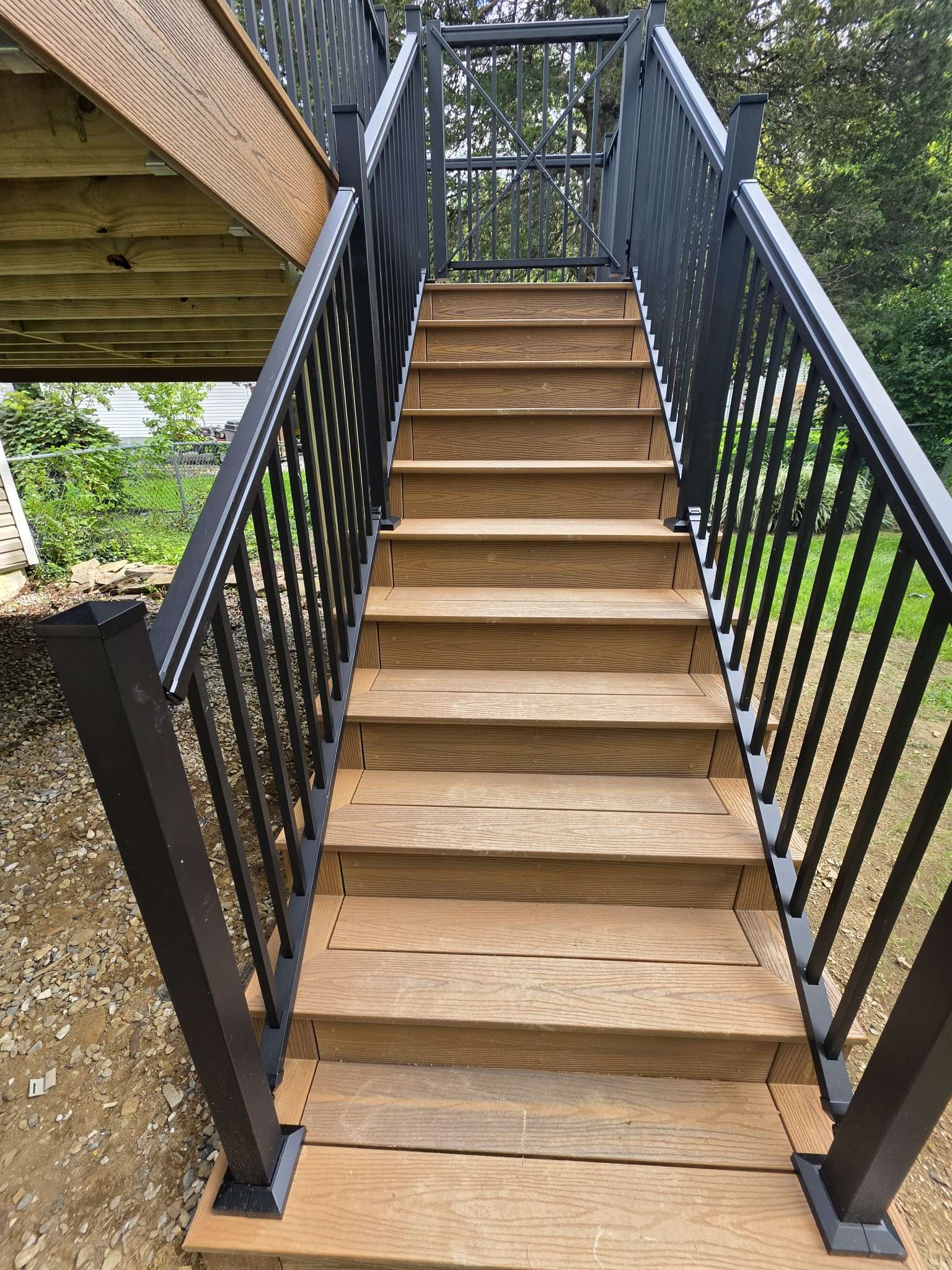

Walk onto any deck job site and look at what the builder reaches for all day. It is not a truck full of specialty gadgets. It is a short list of tools that earn their spot through sheer repetition. Here are the five that matter most, and why each one is non-negotiable.
1. Tape measure
The tape measure is the most-used tool on any job site, and it is not close. Every board gets measured. Every layout gets checked. Every mistake starts with a bad measurement.

A good tape measure has a standout of at least ten feet so you can measure across a deck frame alone. The hook moves slightly on purpose, so it accounts for its own thickness on inside and outside measurements. Do not fight it. That little wiggle is doing math for you.
The habit that matters: measure twice, mark once, cut once. It sounds slow. It is the fastest way to build, because re-cutting a board costs more time than double-checking ever will.
2. Speed square
The speed square is a small triangle of metal that does an absurd amount of work. It marks square cut lines in seconds. It marks 45-degree angles without thinking. It works as a saw guide for quick crosscuts. It checks that corners are actually square during framing.
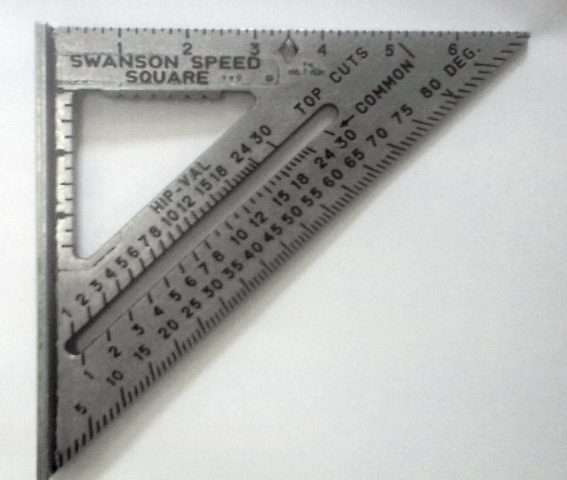
On a deck build, the speed square lives in a back pocket. Layout marks for joists, railing balusters, stair stringers. Every one of those marks starts with this seven-dollar triangle. Builders who skip it end up with cuts that look close but are not. Close is not square, and out-of-square framing shows up everywhere later.
3. Circular saw
The circular saw is the workhorse. It rips boards to width. It cuts decking to length. It notches around posts. It cuts stair stringers along a marked line. One saw handles nearly every cut on a deck.

What earns it the spot is versatility plus portability. The saw goes to the work. You are not carrying sixteen-foot boards back to a stationary saw. On a real job site, that saves hours a day.
Keep a sharp blade in it. A dull blade is slow, dangerous, and leaves ugly cuts. Swap blades the way you swap out sandpaper, without guilt and without waiting too long.
4. Drill/driver
Every deck has hundreds of fasteners. Structural screws for framing. Deck screws or hidden fasteners for the boards. Lag bolts for railings. The drill/driver sets every one of them.

Two things separate a good drill/driver from a frustrating one. Battery life, because nothing kills momentum like a dead battery at 3 PM. And a clutch with real adjustment, because overdriving screws into composite and PVC boards ruins the surface. Set the clutch, test on scrap, and leave it alone.
Carry two batteries minimum and keep one on the charger. The ten seconds it takes to swap a battery beats the twenty minutes of a trip to buy a replacement.
5. Four-foot level
Decks live and die by level and plumb. The four-foot level checks both. Beams get leveled. Posts get plumbed. Stair stringers get checked before a single tread goes on.

A short torpedo level fits in a tool pouch and works for quick checks. But for framing, the four-foot level is the standard. It spans enough distance to show the truth. A nine-inch level on a sixteen-foot beam tells you almost nothing.
Check the level itself once in a while. Flip it end for end on a flat surface. If the bubble reads the same both ways, the level is true. If not, it has been lying to you, and every measurement since the last check is suspect.
What is not on the list
Notice what is missing. No laser levels. No specialty jigs. No single-purpose tools. Those have their place on big or unusual builds. But the five tools above handle the overwhelming majority of deck work. Master them before buying anything fancier.
The best tool advice I can give after twenty-plus years: buy the best version of these five that you can afford, take care of them, and learn to use each one properly. Skill with basic tools beats a garage full of gadgets every time.
Jason Cubero has been remodeling homes since 2003. ProBuildPicks covers the tools and products worth knowing about.


