
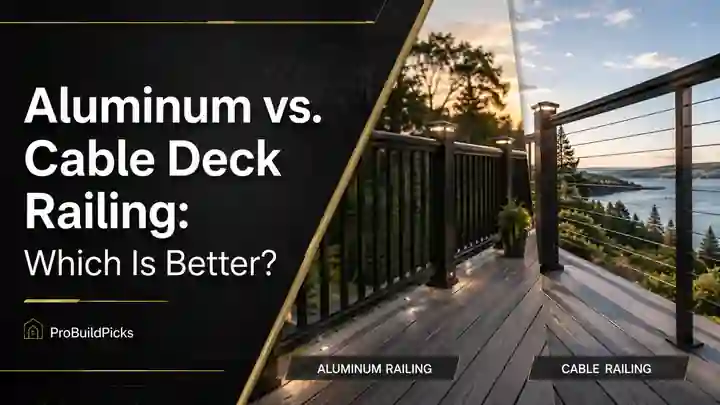
Aluminum and cable railing are both popular low-maintenance choices, but they create very different outdoor spaces. Aluminum balusters are usually simpler and more forgiving to install. Cable railing offers more open sightlines but demands careful post spacing, tensioning and code-compliant installation.
Important: railing is a life-safety system. Always follow the current tested installation instructions for the exact railing product and confirm local code requirements before building.
The Short Answer
Choose aluminum railing if you want a clean, low-maintenance system with straightforward installation, many color options and less ongoing adjustment.
Choose cable railing if preserving the view is one of the biggest design goals and you are willing to accept more precise installation and occasional tension checks.
Appearance
Traditional aluminum railing typically uses vertical balusters. The profiles are slimmer than many vinyl or composite systems and can work with both traditional and modern homes.

Cable railing uses thin stainless-steel cables or engineered cable infill. From a distance, the cables visually disappear more than standard balusters, which makes cable especially attractive on decks overlooking pools, wooded lots, lakes, mountains or large yards.
Which Gives the Better View?
Cable usually wins for open sightlines. The small-diameter infill interrupts the view less than conventional balusters. Slim aluminum balusters still provide a fairly open appearance, however, and may be the better value when the view is important but not the only priority.
Maintenance
Powder-coated aluminum railing generally requires routine cleaning and inspection rather than painting or staining. Cable railing also needs cleaning, but the cable tension and hardware should be inspected periodically. Stainless components can still show environmental buildup, especially in coastal or pool environments.
Installation Difficulty
Aluminum baluster systems are often easier for installers because the rails, posts and balusters are designed around fixed spacing. Cable systems require precise drilling or pre-engineered post components, correct terminal hardware and proper tensioning.
The framing below the railing matters too. Cable tension creates forces that the posts and structure must resist. Do not assume a post attachment that worked for an old wood railing is automatically adequate for a cable system.
Code and Opening Limitations
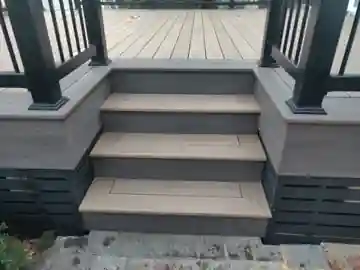
Residential guard rules based on the International Residential Code commonly require guards when the walking surface is more than 30 inches above grade and use a 4-inch opening limitation for most guard infill. Local jurisdictions can adopt different editions or amendments, and cable systems must remain compliant under their approved installation and tension requirements.
Never guess cable spacing from appearance alone. Use the engineered system’s post spacing, cable spacing and tension instructions.
Which Costs More?
Cable railing is often more expensive than standard aluminum baluster railing because of stainless cable, tensioning hardware, specialty posts, additional labor and more detailed installation. Premium aluminum systems can also become expensive, especially when they include drink rails, gates, lighting or custom colors.
The right comparison is a complete installed price per linear foot for the exact system—not the price of one post or one cable kit.
Gates
Both aluminum and cable systems can support gates when the manufacturer offers an approved gate assembly. Plan gates before ordering railing because gate width, post reinforcement, hinges and latches can change the material list.
Drink Rails
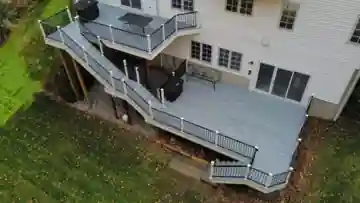
A wide drink rail can make a deck more functional for entertaining. Many aluminum systems can accept a compatible deck-board cap, while some cable systems also offer drink-rail configurations. Confirm that the top-rail arrangement is part of the tested system.
Pool Decks
Pool areas can have additional barrier, gate and latch rules. A low-maintenance aluminum system is popular around pools, while cable can preserve the view of the water. The deciding factor should be the exact local pool-barrier requirements and the approved railing system.
Coastal Environments
Salt air can be hard on metal components. Check the manufacturer’s coating, stainless grade, care instructions and warranty limitations for coastal installations. Both aluminum and cable systems may require more frequent cleaning near saltwater.
Which Is Better for a Modern House?
Cable railing is strongly associated with contemporary architecture, but black aluminum baluster systems can also look modern and often cost less. The house style, deck color and surrounding landscape should drive the final design.
Which Is Better for Families With Children or Pets?
Both systems can be safe when properly designed and code compliant. Aluminum balusters are simple and rigid. Cable systems depend on maintaining proper tension and approved spacing, so regular inspection is especially important.
Aluminum vs. Cable Railing Comparison
| Factor | Aluminum | Cable |
|---|---|---|
| View | Very good | Excellent |
| Maintenance | Low | Low, plus tension checks |
| Installation | Usually simpler | More precise |
| Typical cost | Moderate to premium | Often premium |
| Modern appearance | Very good | Excellent |
| Gates | Common | Available by system |
| Best for open views | Good | Best |
Questions to Ask Before Ordering
- What guard height is required locally?
- Is the exact system approved for this application?
- How important is the view?
- Do you want a drink rail?
- Are gates required?
- Is the property coastal or near a pool?
- What post spacing does the system require?
- What structural blocking is needed?
- What maintenance does the manufacturer recommend?
- What is the complete installed price?
ProBuildPicks Takeaway
Aluminum is the stronger all-around choice when simplicity, low maintenance and value matter most. Cable is worth the premium when preserving the view is a major design goal. Whichever system you choose, use a tested complete railing system and follow the current installation and local code requirements.

