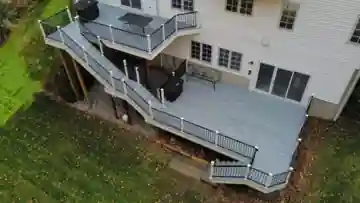
Deck resurfacing can be one of the best ways to upgrade an older deck when the structure underneath is still worth saving. Instead of rebuilding everything from the footings up, the contractor removes the old surface, inspects the frame, makes needed repairs, and installs new decking, trim, stairs or railings.
Quick answer: 2026 consumer cost data from Angi places deck resurfacing around $15 to $50 per square foot when the underlying structure is kept. The actual price can move well outside that range when the frame needs repairs, the deck is elevated, the railing is replaced, or premium composite/PVC materials are selected.

What Deck Resurfacing Actually Includes
Resurfacing is more than staining old boards. In this guide, resurfacing means removing the existing deck surface and installing a new one while keeping the main structure when it is sound enough to remain. That may include:
- Removing old wood or composite deck boards.
- Inspecting joists, beams, posts, ledger connections and footings.
- Replacing isolated damaged framing.
- Adding blocking for borders, breaker boards and railing posts.
- Correcting joist spacing when required by the new decking.
- Installing joist tape where appropriate.
- Installing new composite or PVC decking.
- Replacing fascia, stair treads and risers.
- Replacing railing when the old system does not fit the new design or condition.
2026 Resurfacing Cost Examples
Using the broad $15–$50-per-square-foot 2026 resurfacing range as a planning reference, the deck surface area alone creates the following rough math:
| Deck size | Square feet | Broad resurfacing range |
|---|---|---|
| 12 × 16 | 192 | $2,880–$9,600 |
| 12 × 20 | 240 | $3,600–$12,000 |
| 16 × 20 | 320 | $4,800–$16,000 |
| 20 × 20 | 400 | $6,000–$20,000 |
These are planning examples, not contractor quotes. Railing, stairs, extensive structural repairs, permit requirements, difficult access and premium details can add substantially to the total.

The Frame Inspection Is the Most Important Step
Resurfacing only makes financial sense when the structure underneath is strong enough to justify covering it with a long-life finish material. New composite decking should never be used to hide rot, poor ledger attachment, failing footings or undersized framing.
Before pricing the finish package, read Composite Decking Over an Existing Frame and Deck Resurfacing vs. Replacement.
Why Joist Spacing Can Change the Budget
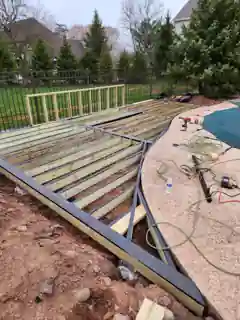
An older wood deck may have framing that worked for the original boards but is not ideal for the new surface. Certain composite/PVC products, diagonal layouts and stair applications may require tighter framing. Adding joists or blocking increases both labor and material cost.
See 12 vs. 16-Inch Joist Spacing for Composite Decking.
Railing Can Be a Large Part of a Resurface
If the existing railing is worn, outdated or incompatible with the new layout, replacement can become one of the largest line items. Aluminum, composite and cable systems have very different installed costs.
Use our Deck Railing Cost in 2026 guide to budget that portion separately.

Stairs Are More Expensive Than Their Square Footage Looks
Resurfacing a stair run may require new treads, risers, fascia, blocking, railings and lighting. If stringers or landings are not reusable, the scope becomes closer to a stair rebuild than a simple surface replacement.
When Resurfacing Stops Making Financial Sense
- Multiple joists or beams are rotted.
- The ledger connection is questionable.
- Footings are settling or poorly located.
- The deck needs major structural changes to meet the planned layout.
- The deck is being significantly enlarged.
- Repair work approaches the cost of rebuilding the structure correctly.
Angi’s 2026 repair data suggests that once repair costs become a large percentage of replacement cost, replacement may make more financial sense. That comparison should be made using an itemized scope rather than a percentage alone.
How to Budget a Resurfacing Project
- Measure the existing deck surface.
- Inspect the framing before selecting finish materials.
- Confirm joist spacing for the exact decking product.
- Decide whether railing is staying or being replaced.
- Count stairs, landings and gates.
- Choose the decking collection and trim details.
- Include demolition, hauling and disposal.
- Carry a structural-repair allowance until the old boards are removed.
Bottom Line
Deck resurfacing can save meaningful money when the existing frame is truly sound. A broad 2026 planning range of about $15–$50 per square foot can help establish expectations, but the final number depends heavily on what is discovered after the old surface comes off. Price the structure first, then the finish package.
For full-project pricing, also read How Much Does a Composite Deck Cost in 2026?.